
Texas Tech University Health Sciences Center Garrison Institute on Aging Memory Clinic Recognized as an Age-Friendly Health System Participant
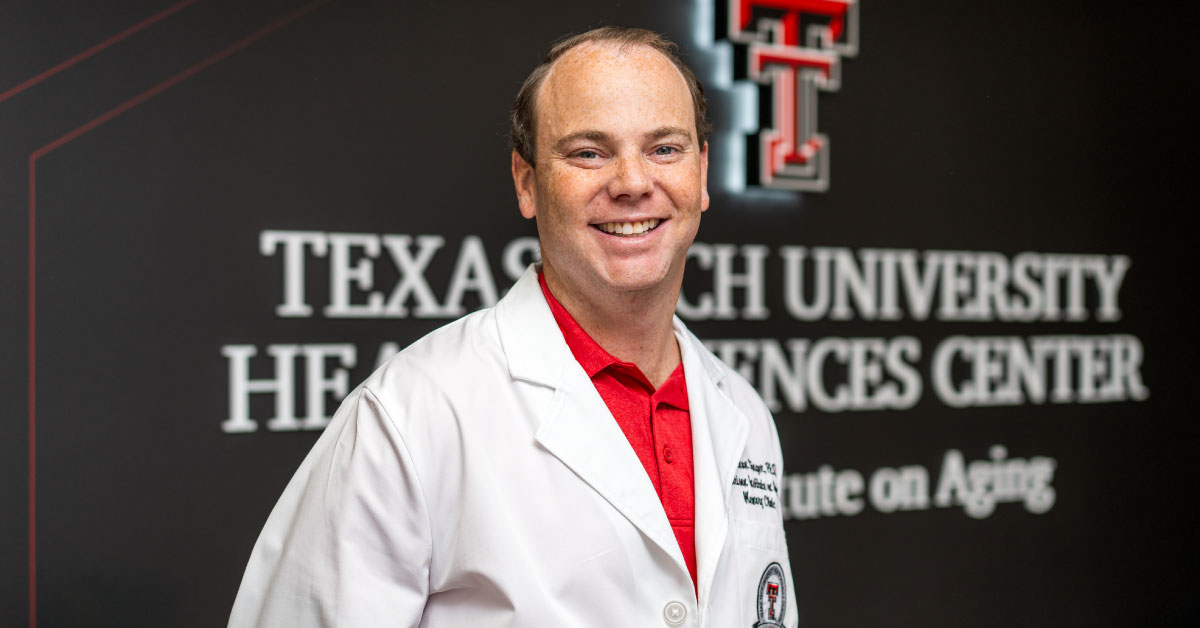
Jonathan Singer, Ph.D.
The Institute for Healthcare Improvement (IHI) has recognized the Texas Tech University Health Sciences Center (TTUHSC) Garrison Institute on Aging Memory Clinic as an Age-Friendly Health System Participant.
The U.S. population ages 65 years and older is expected to nearly double over the next 30 years to an estimated 83.7 million in 2050, according to the U.S. Census Bureau. IHI stated these demographic advances have left the healthcare systems behind as they struggle to reliably provide evidence-based care to every older adult at every care interaction.
Director of the Garrison Institute on Aging Memory Clinic Jonathan Singer, Ph.D., said it is important that all people care about the treatment of the growing elderly population because it affects every family and community.
“As people live longer, the need for accessible, compassionate and high-quality care continues to grow,” Singer said. “Older adults often face unique health challenges from chronic conditions to mobility issues, and they deserve support that helps them maintain their dignity.”
Age-Friendly Health Systems aim to follow an essential set of evidence-based practices; cause no harm; and align with what matters to the older adult and their family caregivers.
Singer added that as part of the Age-Friendly Health Systems movement, the Garrison Institute on Aging Memory Clinic is among the first health systems in the country implementing age-friendly healthcare. The four essential elements of an Age-Friendly Health System are known as the 4Ms: what matters, medication, mentation and mobility.
The Garrison Institute on Aging Memory Clinic in Lubbock, Texas, offers comprehensive evaluations for individuals with suspected dementia, using an interdisciplinary team. Over the past year and a half, the Memory Clinic has served persons with dementia and their families from more than 30 counties around Texas and New Mexico. They also offer a range of expert-led support service programs, including Creative Minds, Connected Caregivers, Grieving Together and the GUIDE Program. All provide meaningful activities for individuals with dementia and compassionate respite and guidance for their caregivers.
“Investing in elder care also strengthens communities,” Singer said. “It helps families balance caregiving responsibilities, reduces strain on hospitals and emergency services. When older adults receive the care they need, everyone benefits.”
Related Stories
Stay Safe: Preventing Summertime Dehydration
As the summer heat continues to intensify, so does the risk for dehydration. Prioritizing hydration this summer can protect you and your loved ones from potentially life-threatening complications.
Gov. Abbott Reappoints Varma to Texas Medical Board
Gov. Greg Abbott recently reappointed Surendra Varma, M.D., to the Texas Medical Board (TMB) District Three Review Committee.
Labor of Love: More Women Turn to Nurse-Midwives for Healthcare
In hospitals, birth centers and private homes across the country, nurse-midwives are expanding women’s healthcare options.
Recent Stories
TTUHSC Recognized for Commitment to Improving Experiences and Advancing Outcomes for First-Generation College Students
FirstGen Forward announced TTUHSC is a new member of the FirstGen Forward Network Class of 2026. FirstGen Forward selected TTUHSC because the university demonstrated a commitment to improving experiences and advancing success for first-generation college students.
TTUHSC Researchers Collaborate in Study of Cancer Drug’s Possible Positive Effects on Alzheimer’s Disease
A drug typically used to treat some forms of cancer may also help delay the progression of Alzheimer’s disease. Boris Decourt, Ph.D., director of the TTUHSC Laboratory on Neurodegeneration and Translational Research, is part of the Phase II trial.
TTU System Board of Regents Approves Appointment of Grover E. Murray Professor
The Texas Tech University System Board of Regents today (Aug. 13) approved the appointment of Rodney Young, M.D., from the Texas Tech University Health Sciences Center (TTUHSC) School of Medicine, as a Grover E. Murray Professor.