
TTUHSC Researchers Collaborate in Study of Cancer Drug’s Possible Positive Effects on Alzheimer’s Disease
A drug typically used to treat some forms of cancer may also help delay the progression of Alzheimer’s disease.
A new Phase II clinical trial, sponsored by St. Joseph’s Hospital and Medical Center in Phoenix, will assess if the drug lenalidomide can help patients suffering from early-stage Alzheimer’s.
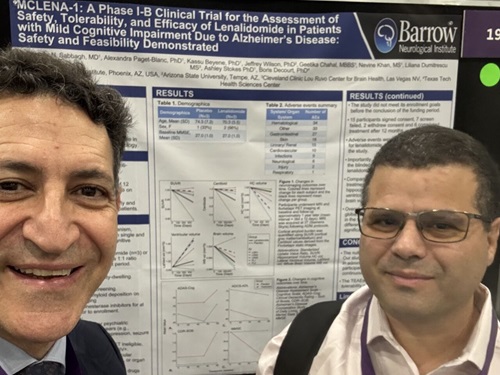
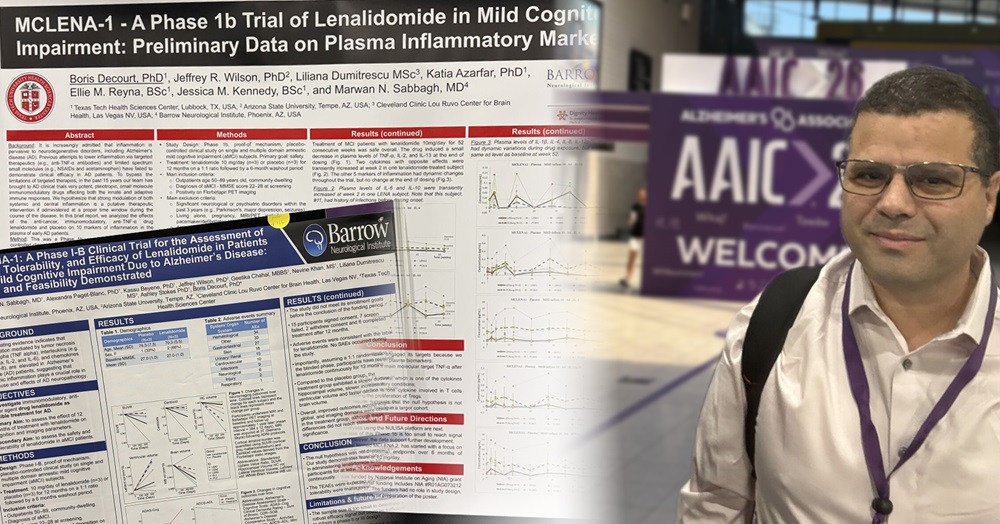
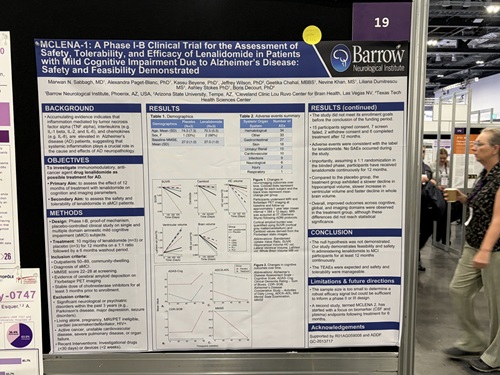
Boris Decourt, Ph.D., director of the Texas Tech University Health Sciences Center (TTUHSC) Laboratory on Neurodegeneration and Translational Research, is collaborating with St. Joseph’s in the Phase II trial. He recently presented findings from a Phase I trial of lenalidomide at the 2026 Alzheimer’s Association International Conference.
“Our group has been studying the effects of strong FDA-approved immunomodulatory drugs in Alzheimer’s patients since 2008,” Decourt said. “While the first drug was too toxic, recent results from our one-year-long Phase Ib trial with lenalidomide on a small group of patients is showing great promise in slowing brain shrinkage that is associated with the disease.”
Lenalidomide is an FDA-approved medication used to treat several types of blood and bone marrow cancers. It helps regulate the immune system by adjusting the activity of a number of immune cells, including lowering the production of specific cytokines, which are small chemical messengers produced by the body during inflammatory events. Research has shown that inflammation, the immune system’s natural response to infection, plays a dual role in Alzheimer’s. The disease triggers it, and it accelerates the disease progression.
MCLENA-2: A Phase II Clinical Trial for the Assessment of Biomarker Trajectory in Patients with Mild Cognitive Impairment Due to Alzheimer’s Disease Treated with Lenalidomide, is assessing whether lenalidomide can alter the immune system in order to successfully reduce inflammation and neurodegeneration in the central nervous system of patients suffering from early forms of Alzheimer’s.
The Phase II trial, funded by the Alzheimer’s Drug Discovery Foundation, began in July 2025. Patients are seen at the Barrow Neurological Institute in Phoenix. Two-thirds of the 45 planned patients receive lenalidomide; one-third receive a placebo. Patients’ blood, saliva and cerebrospinal fluid samples are studied by Decourt’s lab at TTUHSC. Researchers measure and compare several biological markers, along with other clinical data, to determine if the drug is having an effect.
“The ongoing six-month Phase II trial will help us understand how the body responds to the drug and to optimize drug doses in future large-scale studies to maximize drug efficacy while minimizing secondary effects,” Decourt said.
Researchers studying lenalidomide said they believe that repurposing clinically relevant drugs in well-defined studies will accelerate the discovery of the first effective Alzheimer’s treatments capable of stopping the progression of the disease.
Related Stories
TTUHSC Researchers Collaborate in Study of Cancer Drug’s Possible Positive Effects on Alzheimer’s Disease
A drug typically used to treat some forms of cancer may also help delay the progression of Alzheimer’s disease. Boris Decourt, Ph.D., director of the TTUHSC Laboratory on Neurodegeneration and Translational Research, is part of the Phase II trial.
TTUHSC Professor Reflects on Decades of Research Benefitting Thousands of Families
After nearly 50 years with the university, Samuel Prien, Ph.D., has been packing up his office in preparation for retirement in August. Although he’s moving on, his impact at TTUHSC will remain.
Student Research Shows Positive Outcomes from Summer Research Program
Medical student involvement in research is growing, encouraging medical schools to develop programs that support student research plus faculty time for research and mentorship. The Medical Student Summer Research Program (MSSRP) at TTUHSC provides these opportunities, and new research shows positive outcomes.
Recent Stories
TTU System Board of Regents Approves Appointment of Grover E. Murray Professor
The Texas Tech University System Board of Regents today (Aug. 13) approved the appointment of Rodney Young, M.D., from the Texas Tech University Health Sciences Center (TTUHSC) School of Medicine, as a Grover E. Murray Professor.
From Backpacks to White Coats
TTUHSC School of Medicine Admissions Office team members delivered critical school supplies worth nearly $6,500 in total on Thursday, Aug. 6, to Bayless Elementary School.
TTUHSC School of Medicine Students Receive First White Coat
The TTUHSC School of Medicine Class of 2030 received their first white coat and pledged their commitment to the medical profession at the White Coat Ceremony today.