
TTUHSC Researchers Find Blood-Brain Barrier Remains Resilient in Alzheimer’s Disease Model
A team of scientists at Texas Tech University Health Sciences Center (TTUHSC) has published new evidence suggesting that the brain’s protective shield — known as the blood-brain barrier (BBB) — remains largely intact in a commonly used mouse model of Alzheimer’s disease. The discovery challenges long-standing assumptions that Alzheimer’s disease causes the BBB to “leak,” potentially reshaping how researchers think about drug delivery for the disease.
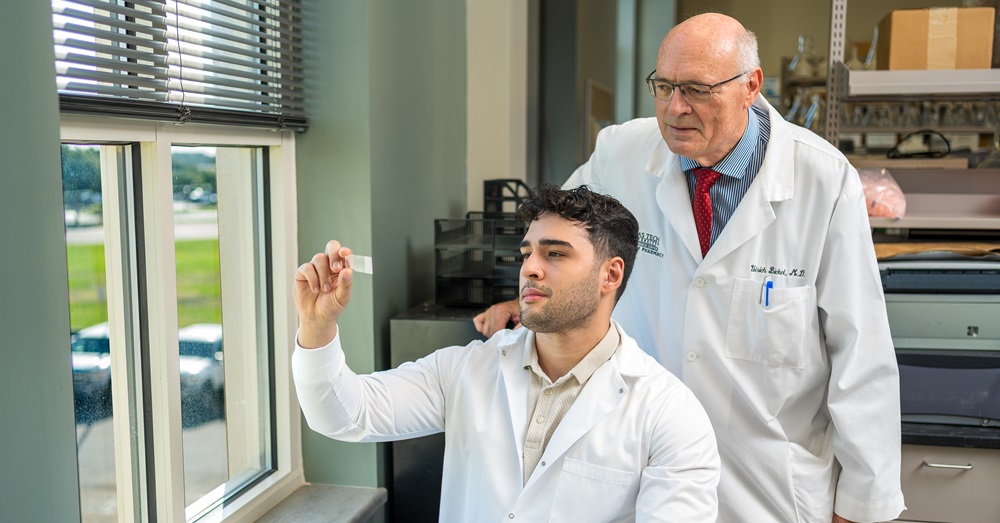
The study, published July 23 in Fluids and Barriers of the CNS, was conducted by a research team from the Department of Pharmaceutical Sciences and the Brain Drug Discovery Center at TTUHSC’s Jerry H. Hodge School of Pharmacy in Amarillo, and from the TTUHSC Graduate School of Biomedical Sciences. Ulrich Bickel, M.D., was principal investigator and senior author, and Ehsan Nozohouri, a TTUHSC graduate research assistant, was lead author. Co-authors include TTUHSC graduate researchers Behnam Noorani, Dhavalkumar Patel, Yeseul Ahn and Sumaih Zoubi.
Alzheimer’s disease is known for memory loss and cognitive decline. In the brain, it is marked by amyloid-beta plaques and tau tangles. For decades, scientists have also debated whether Alzheimer’s disease damages the BBB — the tightly linked endothelial cells lining the inner surface of brain blood vessels that act as a security gate, blocking harmful substances while letting in essential nutrients by specific transporters.
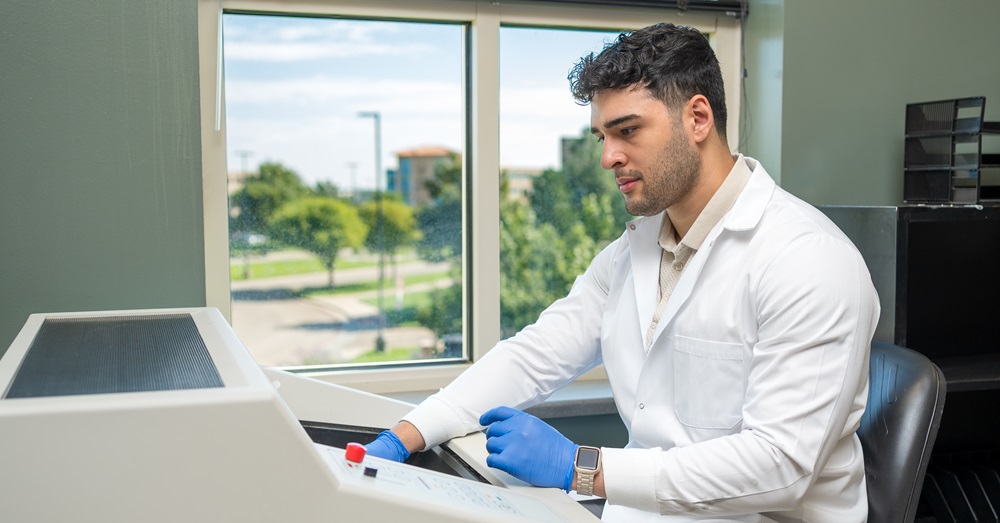
To explore this question, Nozohouri and colleagues used Tg2576 mice, a well-studied model of Alzheimer’s disease that forms amyloid plaques. The team injected the mice with a harmless test molecule, [¹³C₁₂]sucrose, which normally crosses the BBB very poorly. Using highly sensitive analytical tools (liquid chromatography with tandem mass spectrometry, or LC-MS/MS) and advanced tissue-sampling methods (laser microdissection), they tracked whether sucrose leaked into different brain regions. Their key findings include:
- No major leakage detected: Sucrose levels in the brain remained extremely low in both Alzheimer’s and healthy control mice, both at young and old ages, suggesting an intact barrier.
- Stable across regions: Critical brain regions involved in memory and cognition showed no differences between groups.
- Structure preserved: Even around amyloid plaques, tight junction proteins — the “mortar” sealing BBB cells together — remained mostly unaffected.
Together, these results indicate that while small, localized changes may occur near plaques, the BBB as a whole retains its protective function in this model.
“Our findings challenge the assumption of widespread BBB leakiness in Alzheimer’s disease,” Nozohouri said. “This means that drug delivery strategies may need to be designed with the understanding that the barrier is not broadly compromised.”
While the Tg2576 mouse model provides valuable insights, Nozohouri emphasized the need for additional models that more closely replicate human physiology. There are drugs known as monoclonal antibodies that have been approved by FDA, and they show some ability to slow down cognition decline.
As a next step in their research, Nozohouri said the team could study the rodent version of the approved monoclonal antibodies to determine if there are any possible leakages caused by microhemorrhages or brain swelling that potentially could cause the leakage at the blood brain barrier.
“We still have much to learn about how Alzheimer’s disease impacts the brain’s defenses,” he said. “Our ultimate goal is to better predict how drugs behave in patients, so we can design therapies that truly work.”
Related Stories
TTUHSC Professor Reflects on Decades of Research Benefitting Thousands of Families
After nearly 50 years with the university, Samuel Prien, Ph.D., has been packing up his office in preparation for retirement in August. Although he’s moving on, his impact at TTUHSC will remain.
Student Research Shows Positive Outcomes from Summer Research Program
Medical student involvement in research is growing, encouraging medical schools to develop programs that support student research plus faculty time for research and mentorship. The Medical Student Summer Research Program (MSSRP) at TTUHSC provides these opportunities, and new research shows positive outcomes.
‘Tropical Neglected Disease’ Not Forgotten by TTUHSC Researcher
Afzal Siddiqui, Ph.D., director of the TTUHSC Center for Tropical Medicine and Infectious Diseases, developed SchistoShield®, a vaccine to treat schistosomiasis, as a humanitarian effort, rather than making it for profit.
Recent Stories
From Backpacks to White Coats
TTUHSC School of Medicine Admissions Office team members delivered critical school supplies worth nearly $6,500 in total on Thursday, Aug. 6, to Bayless Elementary School.
TTUHSC School of Medicine Students Receive First White Coat
The TTUHSC School of Medicine Class of 2030 received their first white coat and pledged their commitment to the medical profession at the White Coat Ceremony today.
TTUHSC Professor Reflects on Decades of Research Benefitting Thousands of Families
After nearly 50 years with the university, Samuel Prien, Ph.D., has been packing up his office in preparation for retirement in August. Although he’s moving on, his impact at TTUHSC will remain.