
TTUHSC Researcher Awarded CPRIT Grant to Study Type of Pediatric Bone Cancer
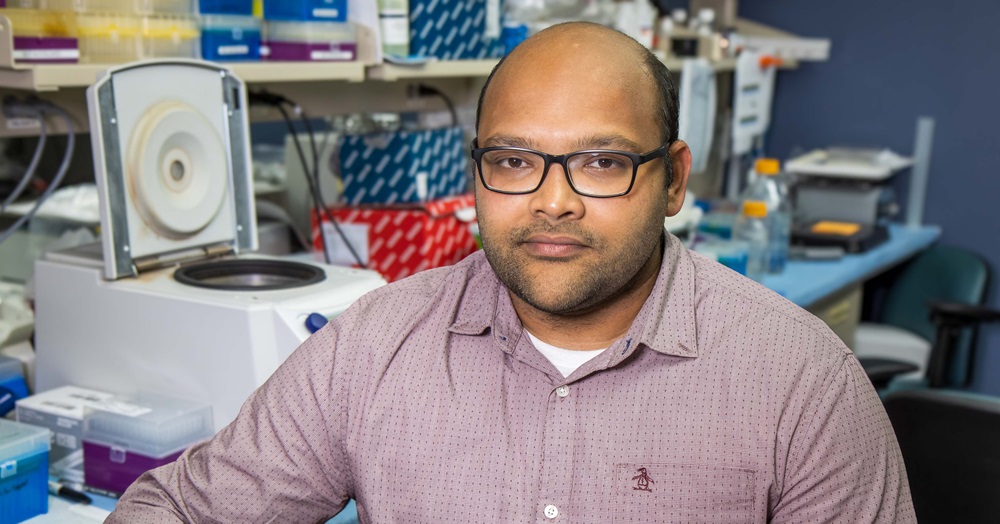
For children and young adults diagnosed with osteosarcoma, a common type of bone cancer for that age group, the odds of survival can be devastatingly low (20-30%) when the disease spreads to the lungs.
“Treatments for osteosarcoma haven’t changed since the 1980s,” Balakrishna Koneru, Ph.D., said. “That leaves us with a critical need for more effective and innovative therapies for these patients.”
In an effort to improve the outcomes for these young patients, the Cancer Prevention and Research Institute of Texas (CPRIT) recently awarded a two-year, $198,822 grant to Koneru, an assistant professor of pediatrics at TTUHSC’s School of Medicine and Graduate School of Biomedical Sciences, and a former postdoctoral researcher for C. Patrick Reynolds, M.D., Ph.D., director of the TTUHSC School of Medicine Pediatric Cancer Research Center.
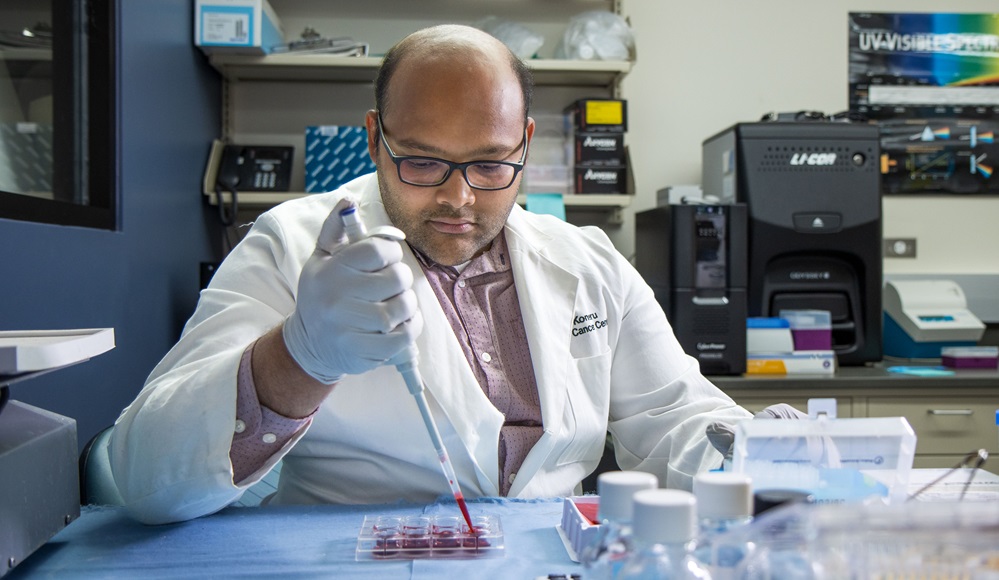
The grant (“Investigating Integrin Subunit Alpha-V as a Therapeutic Target in ALT-Dependent Osteosarcomas”) is a CPRIT Texas Regional Excellence in Cancer: Pilot Study Award. These awards provide up to $200,000 over two years to investigators who are conducting original and innovative cancer research, located in Texas regions historically underserved by cancer research and working 100 miles or more from a National Cancer Institute-designated cancer center located within the state.
Koneru said osteosarcomas are one of several cancers that often have poor outcomes because their cells use a special survival trick called alternative lengthening of telomeres or ALT. Telomeres are caps on the end of chromosomes that protect the genetic information contained within the cell. Cancer cells need to keep lengthening these telomeres to continuing dividing.
“Most cancers do this by turning on an enzyme called telomerase, but some instead switch on ALT,” Koneru explained. “ALT is especially common in certain sarcomas and in aggressive forms of childhood neuroblastoma. Unfortunately, cancers that rely on ALT are very hard to treat, and there are currently no therapies designed to specifically target them.”
Koneru said his group previously has shown that approximately 70% of osteosarcoma patients have tumors driven by ALT, a telomere maintenance mechanism that can be detected with a reliable laboratory test. Because osteosarcoma shows such a high prevalence of the ALT phenotype, his research has focused on this cancer type.
Using CRISPR (Clustered Regularly Interspaced Short Palindromic Repeats) screenings, which make it possible to alter thousands of genes at once to identify those essential for tumor survival, the team discovered that a protein called Integrin Alpha V (ITGAV) plays a critical role in the survival of ALT-driven osteosarcomas.
“This proposal is focused on investigating ITGAV as a potential therapeutic target for these difficult-to-treat tumors,” Koneru added.
Supported by this CPRIT grant, Koneru’s laboratory will seek to expand on its novel work with ITGAV to strengthen its findings and demonstrate the protein's importance in treating ALT-driven cancers. If successful, he said the study could pave the way for a new drug to treat osteosarcoma.
“The ITGAV gene is essential for ALT-positive osteosarcomas,” Koneru said. “In this study, we are trying to figure out exactly why it's essential and if we can develop this as a therapeutic target for ALT-dependent osteosarcoma.”
Depending on the study’s outcome, Koneru said their findings also could be expanded to other cancers.
“It's not just osteosarcoma, but other sarcomas which also are known to have a high prevalence of ALT,” Koneru said. “They also can potentially be targeted using a specific drug that we might find during our research.”
Related Stories
TTUHSC Professor Reflects on Decades of Research Benefitting Thousands of Families
After nearly 50 years with the university, Samuel Prien, Ph.D., has been packing up his office in preparation for retirement in August. Although he’s moving on, his impact at TTUHSC will remain.
Student Research Shows Positive Outcomes from Summer Research Program
Medical student involvement in research is growing, encouraging medical schools to develop programs that support student research plus faculty time for research and mentorship. The Medical Student Summer Research Program (MSSRP) at TTUHSC provides these opportunities, and new research shows positive outcomes.
‘Tropical Neglected Disease’ Not Forgotten by TTUHSC Researcher
Afzal Siddiqui, Ph.D., director of the TTUHSC Center for Tropical Medicine and Infectious Diseases, developed SchistoShield®, a vaccine to treat schistosomiasis, as a humanitarian effort, rather than making it for profit.
Recent Stories
From Backpacks to White Coats
TTUHSC School of Medicine Admissions Office team members delivered critical school supplies worth nearly $6,500 in total on Thursday, Aug. 6, to Bayless Elementary School.
TTUHSC School of Medicine Students Receive First White Coat
The TTUHSC School of Medicine Class of 2030 received their first white coat and pledged their commitment to the medical profession at the White Coat Ceremony today.
TTUHSC Professor Reflects on Decades of Research Benefitting Thousands of Families
After nearly 50 years with the university, Samuel Prien, Ph.D., has been packing up his office in preparation for retirement in August. Although he’s moving on, his impact at TTUHSC will remain.