
Texas Tech University Health Sciences Center Awarded Grant to Improve Diabetes Testing Access in Rural West Texas

Having high blood sugar from diabetes can lead to serious health problems over time. Primary health concerns include nerve, kidney and heart damage.
Prediabetes and type 2 diabetes can progress without noticeable symptoms. Catching either condition early can help delay serious health complications. The hemoglobin A1C test is considered one of the best screening tools. It is a blood test that shows a person’s average blood glucose (blood sugar) level over the past three months. The test can also be used to monitor blood glucose levels in people with type 1 diabetes.
But in rural communities, access to A1C testing can be limited, making early detection and monitoring less likely. A new grant from the American Medical Association (AMA) will improve availability for people living in rural West Texas. As part of the Community Health Impact Lab Micro Grants Program, the AMA awarded $50,000 to Adrian Billings, M.D., Ph.D., F. Marie Hall Endowed Chair of Rural Health and associate academic dean for the School of Medicine at Texas Tech University Health Sciences Center (TTUHSC) at the Permian Basin, and the TTUHSC Institute of Telehealth and Digital Innovation for their shared Medicine on the Move initiative. The A1C testing will be part of other preventative health screenings available to rural communities through the initiative.
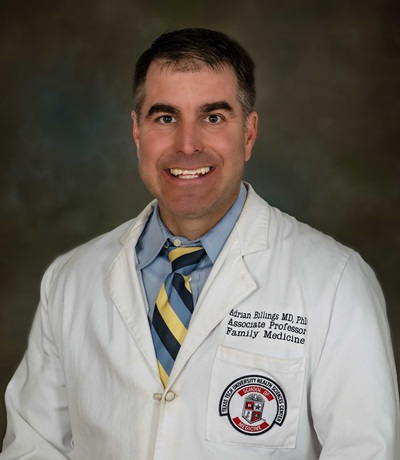
“The goal of this was to get hemoglobin A1C machines into some of our existing telehealth sites,” Billings said. “When a telehealth appointment is being done, and the physician wants a hemoglobin A1C, it can be done right then and there. And then the physician can give immediate feedback based on the result.”
Currently, at existing telehealth clinics in the region, physicians order a blood draw, and the sample is sent away for testing. Results could take two to three days. The A1C machines purchased with this grant can provide immediate results. Billings identified Marathon, Fort Davis and Coyanosa as telehealth sites along with the Balmorhea Independent School District.
“The other arm of this is to make it more available at community health fairs,” Billings said. “In our Big Bend region, there are vast distances to travel for services such as healthcare. It’s important for us to bring healthcare to where the patient is. I think that’s increasingly going to look like more telehealth access and more community health fairs where these events are happening within a drivable journey for rural patients.”
According to the AMA, the goal of the micro grants program is to spark physician-driven innovation that delivers practical, measurable improvements in community health and to identify ideas that can be expanded or replicated to benefit more patients nationwide.
“Our rural healthcare crisis is larger than any one institution can handle on their own,” Billings said. “Working together, we can learn from one another to have a greater impact on that rural patient.”
Billings said that earning the grant validates the important and much-needed rural work that TTUHSC is doing to improve healthcare in rural areas.
“There are real challenges where a rural ZIP code is a risk factor for health,” Billings said. “The root cause is really just a lack of access to healthcare services within a reasonable driving distance, whether that be a pharmacy, a lab, a labor and delivery unit or a simple test like a hemoglobin A1C.”
Billings continued, “I’m very proud of TTUHSC and our emphasis on what we’re doing to improve quality access to care in our rural service region.”
Related Stories
Texas Tech University Health Sciences Center Awarded Grant to Improve Diabetes Testing Access in Rural West Texas
The American Medical Association (AMA) awarded $50,000 to Adrian Billings, M.D., Ph.D., as part of a new grant to improve access to A1C testing in West Texas.
Stay Safe: Preventing Summertime Dehydration
As the summer heat continues to intensify, so does the risk for dehydration. Prioritizing hydration this summer can protect you and your loved ones from potentially life-threatening complications.
Gov. Abbott Reappoints Varma to Texas Medical Board
Gov. Greg Abbott recently reappointed Surendra Varma, M.D., to the Texas Medical Board (TMB) District Three Review Committee.
Recent Stories
Texas Tech University Health Sciences Center Announces Relocation and Expansion of the TTUHSC School of Nursing Mansfield Instructional Site
TTUHSC and the City of Mansfield announced a new collaboration to relocate and expand the School of Nursing’s existing Mansfield instructional site during the Mansfield City Council meeting on Monday, Aug. 24.
TTUHSC Recognized for Commitment to Improving Experiences and Advancing Outcomes for First-Generation College Students
FirstGen Forward announced TTUHSC is a new member of the FirstGen Forward Network Class of 2026. FirstGen Forward selected TTUHSC because the university demonstrated a commitment to improving experiences and advancing success for first-generation college students.
TTUHSC Researchers Collaborate in Study of Cancer Drug’s Possible Positive Effects on Alzheimer’s Disease
A drug typically used to treat some forms of cancer may also help delay the progression of Alzheimer’s disease. Boris Decourt, Ph.D., director of the TTUHSC Laboratory on Neurodegeneration and Translational Research, is part of the Phase II trial.