
Transition to Fall May Have Some People Feeling the Blues
Shorter Days, Less Sunshine Can Lead to Seasonal Affective Disorder
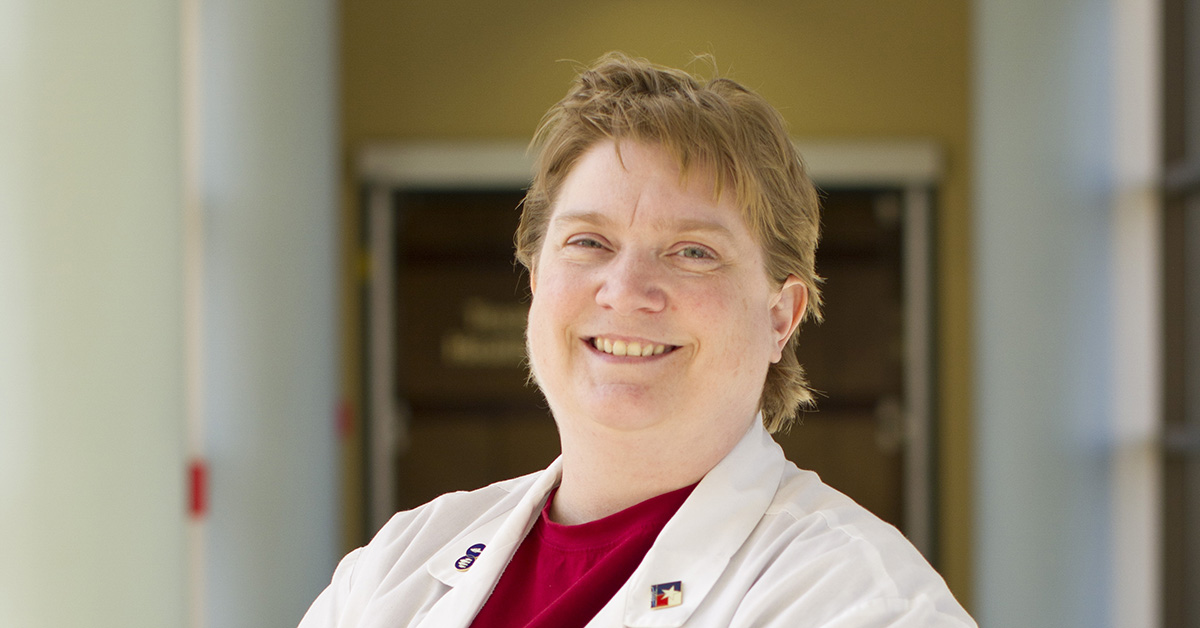
Kelly Bennett, M.D.
As the seasons transition from summer’s long days and sweltering heat to the shorter, cooler and more colorful days of autumn, there are fewer hours and opportunities for people to enjoy the sunlight. This can lead to a form of depression known as seasonal affective disorder, or SAD, a low level of depression that's common in the northern hemisphere during this time of year when Earth tilts away from the sun and gives us fewer hours of daylight and chillier temperatures.
Kelly Bennett, M.D., a family medicine doctor at Texas Tech Physicians and associate professor at Texas Tech University Health Sciences Center (TTUHSC) School of Medicine, said this lack of warmth and sunshine has a tendency to make people isolate themselves indoors.
“The body likes the sunlight versus dark,” Bennett said. “It helps us to regulate our circadian rhythms, so we really love to have at least 12 hours of sunlight a day, if not more. People are more energetic when it's warmer, and when there's more sunlight, people spend more time outside their homes interacting with people.”
There are ways in which people can manage their exposure to sunlight, especially in the morning. One of the tools Bennett frequently recommends is a light therapy lamp. These lamps, also known as light boxes, are designed to simulate sunlight and stimulate the pineal gland in the brain, making the body think its bright and sunny even in the dead of night. The pineal gland is responsible for producing melatonin, a hormone that regulates the body’s circadian rhythms that play a significant role in a person’s sleep patterns.
For those who may not have access to a light box, Bennett suggested an alternative that helps her as she prepares for a day at the office: turning on all the lights in the house.
“When I wake up in the morning, I'm a complete grump and I would love to just shade my eyes and blindly go around the house without putting a light in my eyes because I find it painful to get up in the morning,” Bennett explained. “But I have learned that even though it hurts, it's a lot better if I flip on every single light — the lamp, the light overhead, two lights in my bathroom — and just saturate myself with light to tell my pineal gland, ‘Okay, even though it's seven o'clock and pitch dark outside, it is daylight to you, so you need to get up and get at it.’ I have found that that helps very much, although when I get to work and the sun hasn't come up yet, I’m back to being maybe a wee bit grumpy.”
And though there is not an abundance of research to back it up, Bennett said some people experiencing seasonal affective disorder take vitamin D supplements because they are thought to generally help with mood disorders. However, she added, before purchasing a light box or a bottle of vitamin D, it’s important for one to know if the blues they’re experiencing are due to a bout of seasonal affective disorder or whether their feelings are an indication of something more serious.
“If dark mornings make you feel like, ‘This is not much fun; I don't want to be here, I'd rather be on vacation on a beach,’ but then you start interacting with people at work and all that just drops away and you feel fine, you're probably dealing with a touch of seasonal affective disorder,” Bennett said. “However, if you get to work and you still feel upset and depressed and grumpy, and even interacting with folks isn’t lightening your mood, then you may need to talk to your doctor or a therapist about your feelings.”
Related Stories
Stay Safe: Preventing Summertime Dehydration
As the summer heat continues to intensify, so does the risk for dehydration. Prioritizing hydration this summer can protect you and your loved ones from potentially life-threatening complications.
Gov. Abbott Reappoints Varma to Texas Medical Board
Gov. Greg Abbott recently reappointed Surendra Varma, M.D., to the Texas Medical Board (TMB) District Three Review Committee.
Labor of Love: More Women Turn to Nurse-Midwives for Healthcare
In hospitals, birth centers and private homes across the country, nurse-midwives are expanding women’s healthcare options.
Recent Stories
TTUHSC Recognized for Commitment to Improving Experiences and Advancing Outcomes for First-Generation College Students
FirstGen Forward announced TTUHSC is a new member of the FirstGen Forward Network Class of 2026. FirstGen Forward selected TTUHSC because the university demonstrated a commitment to improving experiences and advancing success for first-generation college students.
TTUHSC Researchers Collaborate in Study of Cancer Drug’s Possible Positive Effects on Alzheimer’s Disease
A drug typically used to treat some forms of cancer may also help delay the progression of Alzheimer’s disease. Boris Decourt, Ph.D., director of the TTUHSC Laboratory on Neurodegeneration and Translational Research, is part of the Phase II trial.
TTU System Board of Regents Approves Appointment of Grover E. Murray Professor
The Texas Tech University System Board of Regents today (Aug. 13) approved the appointment of Rodney Young, M.D., from the Texas Tech University Health Sciences Center (TTUHSC) School of Medicine, as a Grover E. Murray Professor.