
American Association for the Advancement of Science Names Srivastava as 2022 Fellow
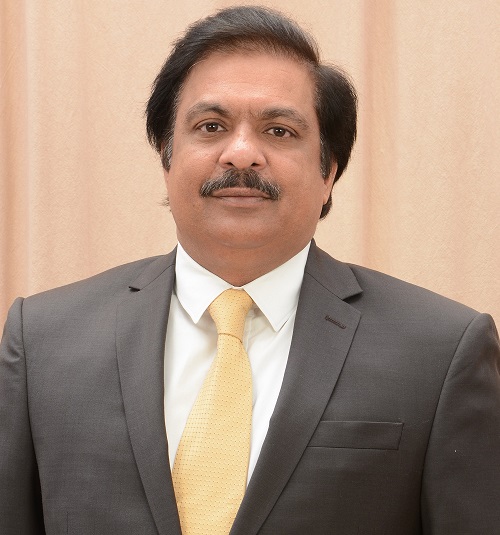
Sanjay K. Srivastava, M.S., Ph.D.
As a University Distinguished Professor and department chair at the Texas Tech University Health Sciences Center (TTUHSC) Jerry H. Hodge School of Pharmacy, Sanjay K. Srivastava, M.S., Ph.D., has earned a reputation as a productive scientist over the last three decades. In recognition of his distinguished contributions to the field of pharmaceutical sciences, including molecular pharmacology, cancer chemoprevention, cancer therapeutics, drug resistance and drug repurposing, the American Association for the Advancement of Science (AAAS) has selected Srivastava as a Class of 2022 Fellow.
AAAS Fellowship is a lifetime honor based upon the nominee’s scientifically or socially distinguished efforts to advance science or its applications. AAAS Fellows are nominated by their peers, and those considered by the AAAS Council to be scientifically distinguished are then elected to receive the honor. Srivastava and the 505-member Fellowship Class of 2022 will be celebrated at the AAAS annual Fellows Forum that will be held on a summer date to be determined in Washington, DC.
“I consider it an extreme honor to be included in the AAAS Academy of Fellows, as several Nobel laureates and high-profile researchers are also Fellows of AAAS,” Srivastava said. “I would like to profusely thank all of my graduate students, post-docs and mentors for their support. They played an important role in my research journey.”
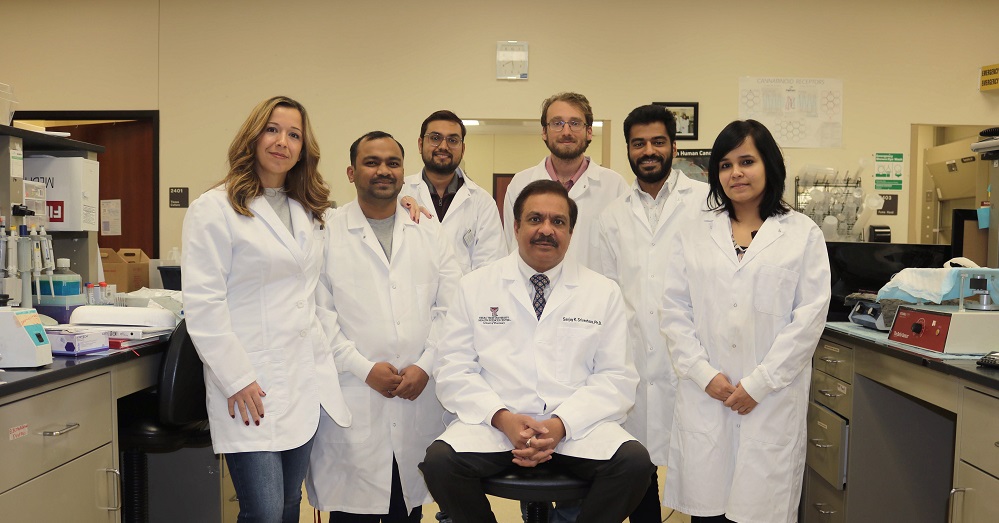
Sanjay K. Srivastava, M.S., Ph.D. and his laboratory team
Named one of the World’s Top 2% Scientists for 2020 and 2021 in a list compiled by Stanford University, Srivastava has authored more than 160 peer-reviewed research articles, received more than 10,000 citations for those published studies and holds an h-index of 58, a metric used to calculate an author’s productivity and citation impact. Many of the journals in which Srivastava’s studies have been published are considered to have high impact factors, which is a calculation of a journal’s quality.
Srivastava has been funded by both the National Institutes of Health (NIH) and the National Cancer Institute. His laboratory focuses on delineating the signaling mechanisms responsible for tumor growth, including angiogenesis and metastasis in different cancer models such as pancreatic, ovarian, breast, melanoma and glioblastoma, as well as understanding the mechanism of drug resistance.
For the last 10 years, Srivastava also has been repurposing existing non-cancer drugs for cancer therapy. For example, his group has shown the anticancer potential of anti-psychotic drugs for breast cancer, brain cancer, and pancreatic cancer. He also demonstrated the anti-tumor effects of anti-malarial and anti-helminthic drugs for drug resistant breast cancer.
In addition, Srivastava is a serial inventor credited with several patents. He received his latest U.S. patent in 2022 for repurposing pimavanserin — an antipsychotic drug that acts within the brain to prevent hallucinations and delusions — to treat various types of cancer.
Srivastava serves on the editorial board of several high-impact journals and on the grant review panels of the NIH, the U.S. Department of Defense and other agencies. He also has mentored numerous undergraduate and graduate students and post-doctoral fellows who have gone on to establish successful careers as researchers and faculty.
Related Stories
TTUHSC Professor Reflects on Decades of Research Benefitting Thousands of Families
After nearly 50 years with the university, Samuel Prien, Ph.D., has been packing up his office in preparation for retirement in August. Although he’s moving on, his impact at TTUHSC will remain.
Student Research Shows Positive Outcomes from Summer Research Program
Medical student involvement in research is growing, encouraging medical schools to develop programs that support student research plus faculty time for research and mentorship. The Medical Student Summer Research Program (MSSRP) at TTUHSC provides these opportunities, and new research shows positive outcomes.
‘Tropical Neglected Disease’ Not Forgotten by TTUHSC Researcher
Afzal Siddiqui, Ph.D., director of the TTUHSC Center for Tropical Medicine and Infectious Diseases, developed SchistoShield®, a vaccine to treat schistosomiasis, as a humanitarian effort, rather than making it for profit.
Recent Stories
From Backpacks to White Coats
TTUHSC School of Medicine Admissions Office team members delivered critical school supplies worth nearly $6,500 in total on Thursday, Aug. 6, to Bayless Elementary School.
TTUHSC School of Medicine Students Receive First White Coat
The TTUHSC School of Medicine Class of 2030 received their first white coat and pledged their commitment to the medical profession at the White Coat Ceremony today.
TTUHSC Professor Reflects on Decades of Research Benefitting Thousands of Families
After nearly 50 years with the university, Samuel Prien, Ph.D., has been packing up his office in preparation for retirement in August. Although he’s moving on, his impact at TTUHSC will remain.